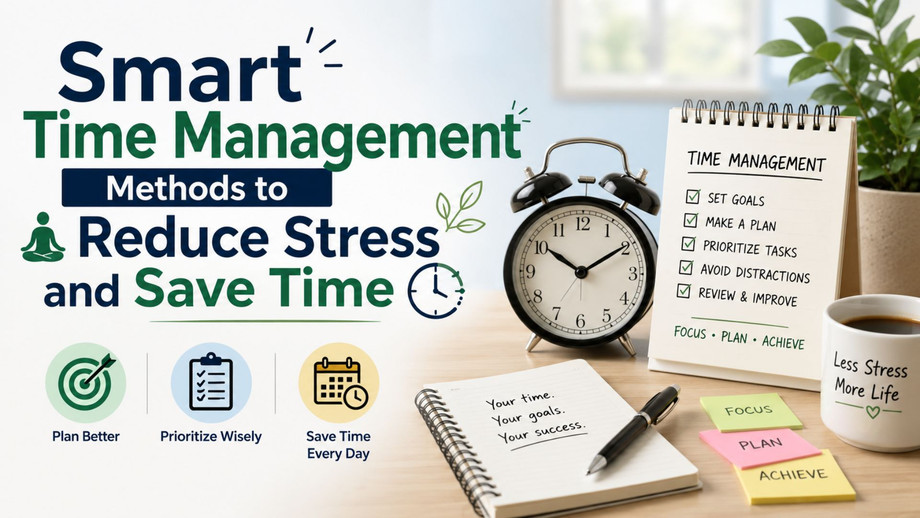
Why do some professionals stay calm under pressure while others constantly feel overwhelmed by deadlines? The answer often comes down to structure, priorities, and the ability to control distractions before they control the workday. Effective time management methods are not about working longer hours. They are about making better decisions with the hours already available.
After coaching startup teams and remote professionals for more than a decade, one pattern remains consistent: people who organize their workload strategically experience lower stress levels and better long-term productivity. Research from the American Psychological Association also shows that unmanaged workloads are among the leading causes of workplace burnout. Building a smarter routine can improve focus, energy, and overall job satisfaction without sacrificing personal time.
Many people wait for motivation before starting important tasks. In reality, productivity depends more on repeatable systems than on emotional energy. High-performing executives, project managers, and entrepreneurs rely on routines because routines reduce mental fatigue.
A structured workflow helps by:
One practical example comes from software development teams using Agile planning frameworks. Breaking large projects into smaller milestones consistently improves completion rates because employees focus on one actionable step at a time instead of feeling overwhelmed by the entire project.
Studies from Stanford University found that heavy multitaskers often struggle more with focus, memory retention, and overall efficiency. Constantly switching between assignments increases cognitive strain, reduces concentration, and lowers work quality over time. This is why many professionals now rely on structured time management methods and work tracking software to maintain better productivity and reduce unnecessary stress.
Instead of juggling multiple priorities simultaneously, many productivity consultants recommend “single-task sprints.” This method involves focusing on one high-impact assignment for 25–50 minutes without interruptions before moving to the next task. Combined with reliable work tracking software, professionals can monitor deadlines, organize workflows, and identify productivity patterns more effectively.
Quick Productivity Tip
Try the “3 Priority Rule” each morning: